
When people hear the phrase biblically accurate satan, many imagine a horned monster ruling a fiery underworld. That image is common in art, movies, and folklore—but it is not the full biblical picture. Scripture presents a more complex figure: an accuser, deceiver, tempter, and spiritual adversary rather than a cartoon villain with a pitchfork.
Understanding what the Bible actually says matters because many modern ideas come from later traditions, not the text itself. In this guide, we’ll explore Satan’s biblical identity, appearance, role, limits, and how different passages have shaped Christian thought over time.
Who Is Biblically Accurate Satan in the Bible?
The word Satan comes from a Hebrew term meaning adversary or accuser. In early biblical usage, it can describe someone who opposes another person. Over time, it becomes associated with a specific spiritual enemy opposed to God’s purposes.
Rather than being equal to God, Satan is consistently shown as a created being with limited authority. He is powerful compared to humans, but never all-powerful.
Key Biblical Roles
The Bible describes Satan as:
- Tempter – One who tries to lead people into sin
- Accuser – One who brings charges against believers
- Deceiver – One who spreads lies and confusion
- Adversary – One who opposes righteousness
- Destroyer – One who seeks harm and spiritual ruin
What Does a Biblically Accurate Satan Look Like?
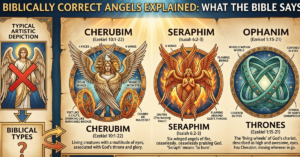
One of the biggest misconceptions is that Scripture gives a clear physical description. It does not provide one consistent visual image.
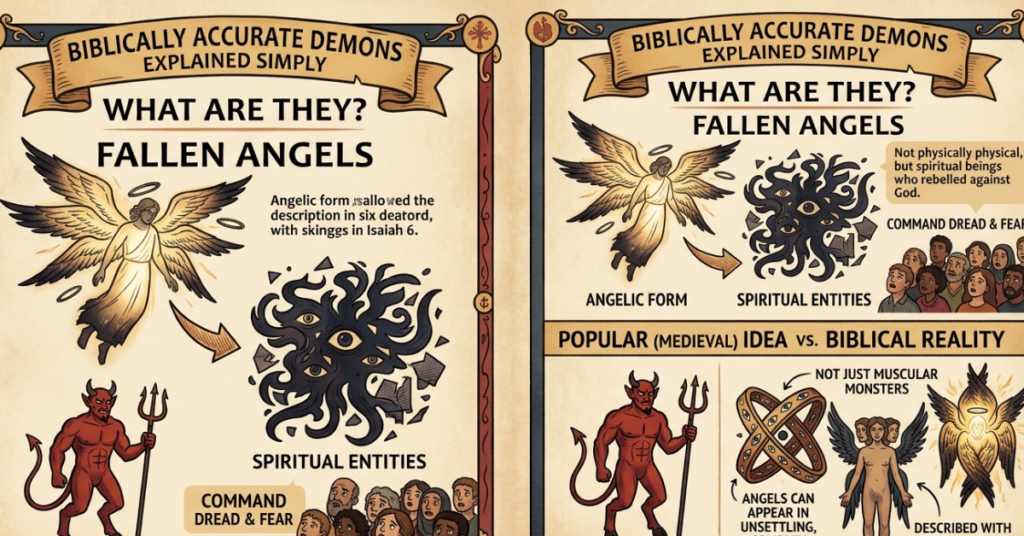
The familiar features—horns, red skin, tail, wings, and pitchfork—largely developed through medieval art and literature. Biblical texts focus more on character and actions than appearance.
Descriptions Connected to Satan
Some passages symbolically associate him with:
- A serpent in Genesis
- A dragon in Revelation
- An angel of light in deceptive form
- A proud being cast down from a high position
These images are symbolic and theological, not necessarily literal portraits.
Was Biblically Accurate Satan Originally an Angel?
Many Christian interpretations teach that Satan was once an angel who rebelled through pride. This view often draws from passages in Isaiah 14 and Ezekiel 28, though scholars debate whether those texts primarily address earthly kings while using elevated imagery.
Common Traditional View
According to classic theology:
- Satan was created good
- Pride led to rebellion
- He was cast down
- He now opposes God and humanity
While widely accepted in many churches, some details come more from interpretation than direct narrative statements.
What Power Does Biblically Accurate Satan Have in Scripture?
The Bible portrays Satan as dangerous but limited. He can tempt, deceive, accuse, and influence systems of evil, but he does not control everything.
Important Limits
He is not:
- Equal to God
- Omniscient (all-knowing)
- Omnipresent (everywhere at once)
- Ultimately victorious
This distinction is crucial. The biblical worldview never presents a battle between two equal forces. God remains sovereign.
Biblically Accurate Satan in the Old Testament vs New Testament
Old Testament
In earlier texts, Satan appears less frequently and sometimes as an accuser figure, such as in Job.
New Testament
The New Testament develops the theme more fully. Satan becomes the tempter of Jesus, enemy of truth, and spiritual opponent of the church.
This progression explains why some readers notice stronger emphasis later in Scripture.
Common Myths About Biblically Accurate Satan
1.Biblically Accurate Satan Rules Hell
The Bible does not describe him as king of hell. Judgment is portrayed as something he himself faces.
2.Biblically Accurate Satan Has Horns and a Tail
That image is mostly artistic tradition, not biblical description.
3.Biblically Accurate Satan Can Do Anything
Scripture repeatedly shows boundaries on his power.
4. Satan Is Equal Opposite of God
This idea resembles dualism more than biblical theology.
Why the Idea of Biblically Accurate Satan Matters
Whether read devotionally, historically, or academically, Satan represents real themes that continue to matter:
- Moral temptation
- Deception and falsehood
- Pride and rebellion
- Spiritual conflict
- Human accountability
These themes help explain why the figure remains central in religious discussion.
How Different Christians Interpret Biblically Accurate Satan Today
Views vary across denominations and scholars:
Literal Personal Being
Many believers understand Satan as a real spiritual being.
Symbol of Evil
Some interpret Satan more symbolically as personified evil.
Both/And Approach
Others see both a spiritual reality and symbolic meaning in the text.
FAQs
Is Satan named Lucifer in the Bible?
The name Lucifer comes from a Latin translation of Isaiah 14. Many later traditions linked it to Satan, though the passage’s original context is debated.
Did Satan appear as the serpent in Eden?
Many Christian readers connect the serpent with Satan, especially through later biblical interpretation.
Can Satan read minds?
The Bible does not state that Satan can read human thoughts in the way God knows hearts.
Why does God allow Satan to act?
This is a major theological question. Different traditions answer it through free will, testing, justice, and the eventual defeat of evil.
Is Satan defeated in the Bible?
Yes, Christian theology teaches that evil’s final defeat is certain, even if conflict continues in the present age.
Conclusion
The real story of biblically accurate satan is far more nuanced than popular culture suggests. Scripture emphasizes his role as deceiver, accuser, and adversary—not a horned ruler on a throne of flames. He is portrayed as dangerous yet limited, active yet ultimately defeated under God’s authority.
If you found this helpful, consider exploring related topics like demons in the Bible, angels in Scripture, or symbolic imagery in Revelation.