
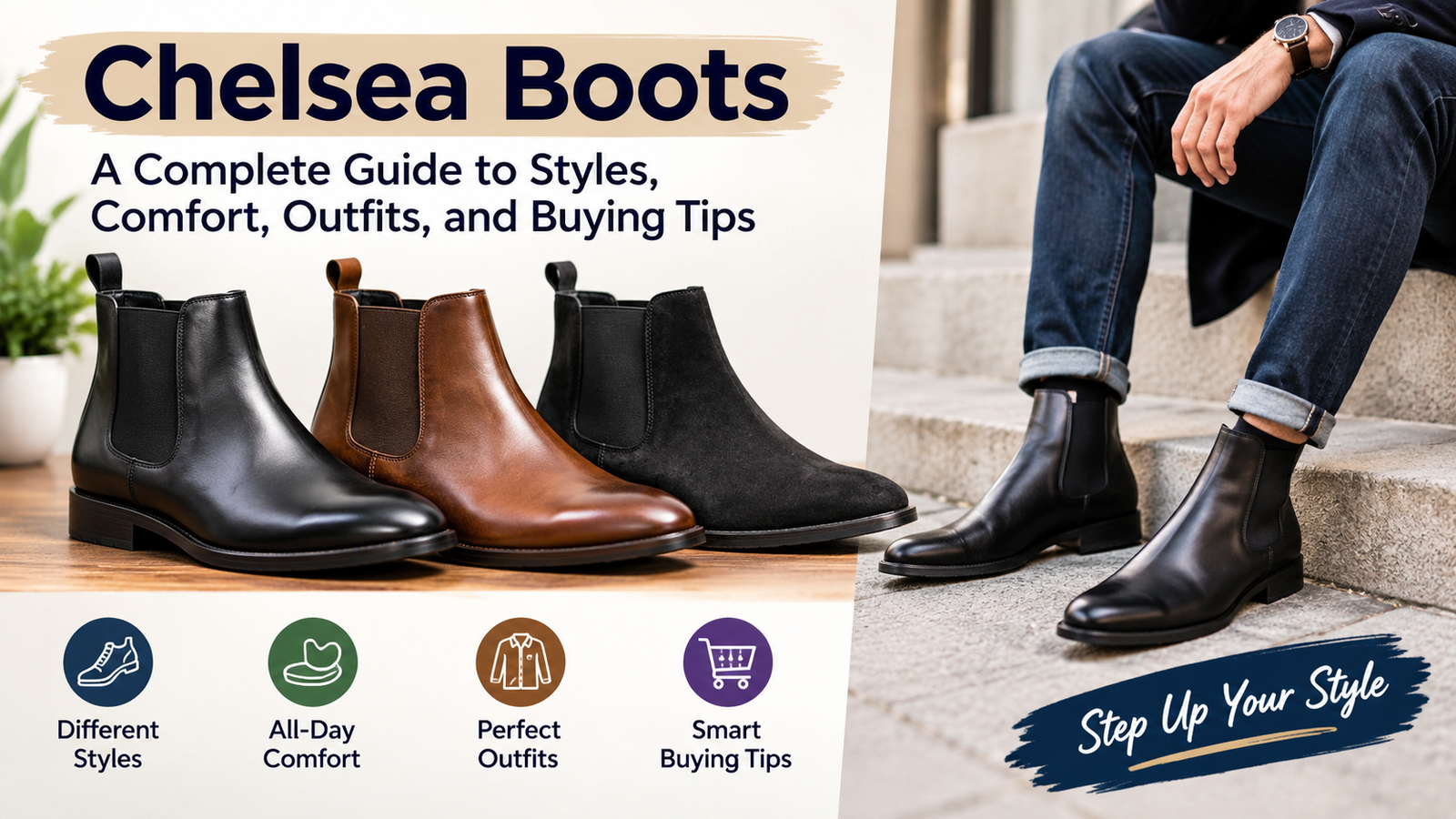

Chelsea boots are a timeless footwear choice that combines comfort, style, and everyday usefulness. Their simple shape makes them easy to wear with many outfits. You can pair them with jeans, trousers, dresses, or skirts. They also work well for casual days and smart occasions.
These ankle-high boots usually feature elastic side panels and a small heel. Most designs have no laces, making them easy to put on and remove. They come in leather, suede, and other materials. You can also find them in many colors, including black, brown, tan, and beige.
Whether you are building a new wardrobe or updating your favorite outfits, these boots offer plenty of options. The key is choosing the right fit, material, and design for your needs. This guide explains their history, popular styles, outfit ideas, benefits, and care tips. It will help you make a more informed choice.
What Are Chelsea Boots?
Chelsea boots are ankle-length shoes known for their clean design and stretchy side panels. These panels allow your feet to slide inside without traditional laces. Many pairs also have small pull tabs at the back. Their smooth shape gives them a neat and simple appearance.
You can wear these boots throughout the year, depending on their material and construction. Leather designs often suit cooler weather and smart outfits. Suede pairs create a softer look for casual settings. Rubber-soled options can provide better grip on everyday surfaces.
One of their biggest advantages is versatility. A single pair can work with several clothing styles. For example, black leather boots look polished with dark trousers. Brown suede versions create a relaxed look with blue jeans. This flexibility makes them a useful addition to many wardrobes.
The History of Chelsea Boots
The story of these boots began in Britain during the Victorian era. Shoemakers developed elastic-sided footwear that was easier to wear than lace-up designs. Queen Victoria’s shoemaker, J. Sparkes-Hall, is often linked to the development of the early style.
The design later became popular among people who wanted practical yet stylish footwear. During the 1960s, the boots gained attention in British fashion. Musicians and young people helped make them a recognizable part of modern street style.
Over time, designers introduced new materials, heel shapes, and sole designs. Traditional versions kept their simple ankle-high shape. Modern options added chunky soles, brighter colors, and fashion-focused details. Today, the style remains popular because it can adapt to changing trends without losing its original character.
Popular Types of Chelsea Boots
Different designs serve different needs. Classic leather pairs have a smooth finish and a smart appearance. They work well for office wear, dinners, and everyday outfits. Black and dark brown are common choices for people who want a versatile pair.
Suede versions have a soft texture that creates a relaxed look. They pair well with denim, chinos, and casual jackets. However, suede needs extra care around rain and mud. Chunky designs feature thicker soles and a bolder shape. They suit streetwear and modern casual clothing.
Some boots have pointed toes for a sharper appearance. Others feature rounded toes for a traditional feel. Waterproof designs may use treated materials or sealed construction. When shopping, consider your daily routine, local weather, and preferred outfits. The best style is one that fits your lifestyle and feels comfortable.
Leather vs. Suede: Which Material Should You Choose?
Leather is a practical option for people who want a polished finish. Smooth leather is often easier to wipe clean than suede. With suitable care, quality leather can last for years. It also works well with formal trousers, dark jeans, and structured coats.
Suede offers a softer texture and a more relaxed appearance. It can look excellent with denim, knitwear, and casual jackets. However, it may show water marks and stains more easily. A suede protector can help reduce some risks, but it does not make every pair waterproof.
Your choice should depend on how you plan to wear your footwear. If you need a pair for regular commuting, consider the weather and cleaning requirements. For occasional outings, suede may suit your style. Always check the manufacturer’s care instructions before applying cleaners or protective products.
How to Choose the Right Size and Fit
A good fit helps prevent discomfort during long days. Your toes should have enough room to move naturally. Your heel should feel secure without painful rubbing. The elastic panels should hold the boot comfortably without making it difficult to put on.
Try footwear later in the day when your feet may be slightly larger. Wear the socks you expect to use most often. Walk around and check for pressure near your toes, heels, and ankles. Do not assume every brand uses the same sizing system.
Leather may soften slightly with wear, but tight shoes should not cause pain. Suede can also change with use, depending on its construction. If you plan to add insoles, check that the boots have enough space. A comfortable fit matters more than choosing a particular size number.
How to Style Chelsea Boots With Jeans
Jeans and ankle boots create an easy outfit for everyday wear. Slim or straight-leg jeans often work well because they show the boot’s shape. You can let the jeans fall naturally over the top or cuff them slightly. Choose the option that looks balanced with your footwear.
Black boots and dark denim create a clean, simple outfit. Brown boots pair naturally with blue jeans and earthy colors. For a relaxed weekend look, add a plain T-shirt and a denim jacket. In cooler weather, try a sweater with a wool coat.
The length of your jeans can change the overall appearance. Very long hems may bunch around the ankle. A neat hem helps keep the outfit looking intentional. Try different combinations in front of a mirror. Small changes in color, fit, and layering can make the same boots feel fresh.
Wearing Chelsea Boots With Formal and Smart-Casual Outfits
These boots can also suit many smart-casual settings. Smooth leather pairs often look good with tailored trousers and a button-down shirt. Add a blazer for a more polished appearance. Dark colors usually create a simple look that works across different occasions.
For business-casual outfits, choose a clean design with minimal decoration. Make sure the trousers fall neatly around the ankle. A bulky sole may feel less suitable for some formal settings. Always consider your workplace dress code before choosing your footwear.
For dinners or social events, try dark boots with fitted trousers and a smart jacket. Keep the colors balanced instead of combining too many bold shades. Although these boots can look refined, they may not replace traditional dress shoes for every formal event. The occasion should guide your final choice.
How Women Can Style Chelsea Boots
Chelsea boots offer women many options for casual and dressy outfits. Pair them with skinny jeans, straight-leg denim, or tailored trousers. A long coat can add shape and warmth during cooler months. For a relaxed look, combine them with a sweater and a simple shoulder bag.
They can also work with skirts and dresses. A short dress with ankle boots creates a modern outfit. A midi skirt offers a softer, balanced look. Black boots provide a strong contrast with lighter clothing, while tan or brown pairs create a warmer effect.
Chunky soles can add a bold touch to simple outfits. Slimmer designs often create a more classic appearance. Choose a heel height that feels stable when walking. If you plan to wear your boots for several hours, comfort should remain part of your styling decision.
How Men Can Style Chelsea Boots
Men can use these boots to create outfits ranging from relaxed to refined. Black leather pairs work well with dark jeans and a fitted shirt. Brown versions suit blue denim, chinos, and neutral sweaters. These combinations are easy to repeat without looking exactly the same.
For smart-casual occasions, wear sleek boots with tailored trousers and a button-down shirt. A lightweight jacket can complete the outfit. In colder weather, combine them with a wool coat or a simple knit sweater. Keep the trousers at a length that does not hide the boots completely.
For weekend wear, choose suede or a design with a thicker sole. Add straight-leg jeans and a casual jacket. You do not need expensive clothing to create a good outfit. Clean footwear, suitable sizing, and balanced colors can make a noticeable difference.
Are Chelsea Boots Comfortable for Everyday Wear?
Comfort depends on the boot’s shape, materials, sole, and fit. Some pairs have cushioned footbeds that help during long periods of walking. Others have firm soles designed more for appearance than support. Reading product details can help you understand what a particular model offers.
Try new boots for short periods before wearing them all day. This gives you time to notice rubbing or pressure. Wear suitable socks and check whether the elastic sides feel comfortable. If the boots cause ongoing pain, stop wearing them and reassess the fit.
The sole also matters. Flexible soles may feel more natural for casual walking. Strong tread can provide better grip on some surfaces. However, no design is ideal for every activity. If you walk long distances regularly, compare comfort features rather than choosing only by appearance.
Chelsea Boots for Different Seasons
These boots can suit several seasons when you choose the right construction. Lightweight leather or suede designs may work well during mild autumn days. They pair easily with jeans, shirts, and light jackets. Neutral colors also fit many seasonal wardrobes.
During winter, consider thicker soles, warmer socks, and materials suited to cold conditions. Some models offer water-resistant treatments, but not every pair can handle snow or heavy rain. Check the product label before using them in wet weather. Slippery surfaces also require suitable traction.
In spring, lighter colors such as tan and beige can complement softer clothing shades. Breathable socks may improve comfort when temperatures rise. Suede can be harder to maintain in wet conditions, so check the forecast before wearing it. With thoughtful choices, one pair can serve you across much of the year.
How to Clean and Care for Chelsea Boots
Regular care helps maintain the appearance of your footwear. For smooth leather, remove loose dirt with a soft brush or cloth. Use a suitable leather cleaner when needed. Apply conditioner according to the product instructions to help keep the leather from drying out.
Suede needs a different approach. Use a suede brush to lift dirt and restore the surface. Treat stains with products designed for suede. Test any cleaner on a small, hidden area first. Avoid soaking suede because excess water can change its texture or leave marks.
Let wet boots dry naturally at room temperature. Keep them away from direct heaters and intense sunlight. Store them in a dry place and use shoe trees if suitable. Regular care takes only a little time. It can help your boots look better and remain useful for longer.
What to Look for When Buying Chelsea Boots
Start by deciding how you will use the boots. Daily wear may call for a comfortable footbed and durable sole. Office outfits may suit a slimmer shape and smooth leather. Casual fashion may leave more room for suede, chunky soles, or unusual colors.
Next, examine the construction. Look at the stitching, elastic panels, sole attachment, and overall finish. Check the return policy before ordering online. Read reviews for useful details about sizing and comfort, but remember that individual experiences can differ.
Price is another important factor. A higher price does not always mean a better fit or longer life. Compare materials, construction, and care needs instead. If possible, try the boots on before buying. Choose a pair that feels comfortable and works with clothing you already own.
Common Mistakes to Avoid
One common mistake is choosing boots only because they look fashionable. A stylish pair may still feel uncomfortable or suit very few outfits. Always consider fit, daily use, and the clothing you already wear. This helps you avoid buying footwear that stays in the closet.
Another mistake is ignoring the weather. Suede can need extra protection, while smooth leather also requires proper care. Do not assume every pair is waterproof. Check the manufacturer’s guidance before walking through heavy rain or snow.
People sometimes choose the wrong trouser length, too. Long hems can bunch around the ankle and hide the boot’s shape. Extremely short hems may not suit every style. Try the full outfit together before deciding. Simple checks can help you get more value from your purchase.
Why Chelsea Boots Remain a Wardrobe Favorite
Fashion trends change, but simple footwear often stays useful. The clean shape of these boots works with many clothing styles. They can look casual with denim and polished with tailored trousers. This flexibility makes them a practical option for people who prefer fewer, more useful wardrobe pieces.
Their slip-on design also saves time. Elastic side panels remove the need for laces, while many designs remain easy to pair with everyday clothing. Different materials and sole shapes offer choices for various tastes. You can select a traditional pair or a modern design with a bolder profile.
The best reason to own a pair is not simply following a trend. It is finding footwear that fits your routine and personal style. When comfort, quality, and appearance work together, your boots can become a regular part of your wardrobe.
Conclusion
Chelsea boots combine a classic shape with the flexibility needed for modern life. They can suit jeans, dresses, tailored trousers, and many smart-casual outfits. The right pair depends on your preferred style, budget, weather, and comfort needs.
Before buying, compare the materials, sole, sizing, and care instructions. Choose a design that works with clothes you already own. Remember that a comfortable fit is more valuable than a fashionable label. With regular cleaning and proper storage, a well-made pair may remain useful for many seasons.
Have you found a style that suits your everyday outfits? Consider which color and material would work best in your wardrobe. A thoughtful choice can make getting dressed easier while giving your personal style a lasting touch.
Frequently Asked Questions
1. What are Chelsea boots best known for?
They are known for their ankle-high shape, elastic side panels, and easy slip-on design. Their simple appearance makes them suitable for casual and smart-casual outfits. Many people choose them because they work with different types of clothing.
2. Can you wear Chelsea boots with jeans?
Yes, they pair well with many jean styles. Slim, straight-leg, and some relaxed jeans can all work. Choose a trouser length that sits neatly around the ankle. Match the boot color with the rest of your outfit.
3. Are Chelsea boots suitable for winter?
Some pairs work well in winter, especially those with suitable soles and weather-resistant materials. However, not every design is waterproof or insulated. Check the product details before wearing them in snow, heavy rain, or icy conditions.
4. Should Chelsea boots fit tightly?
They should feel secure without squeezing your toes or causing pain. Your heel should not rub excessively, and your feet need enough room to move. Try them with your usual socks and walk around before buying.
5. Are leather or suede Chelsea boots easier to maintain?
Smooth leather is generally easier to wipe clean. Suede usually needs special brushing and more careful protection from water and stains. Both materials benefit from suitable cleaning products and proper storage.
6. How long can Chelsea boots last?
Their lifespan depends on material quality, construction, frequency of use, and care. Well-made boots that receive regular maintenance may last for several years. Keep them clean, let them dry naturally, and replace worn soles when appropriate.