
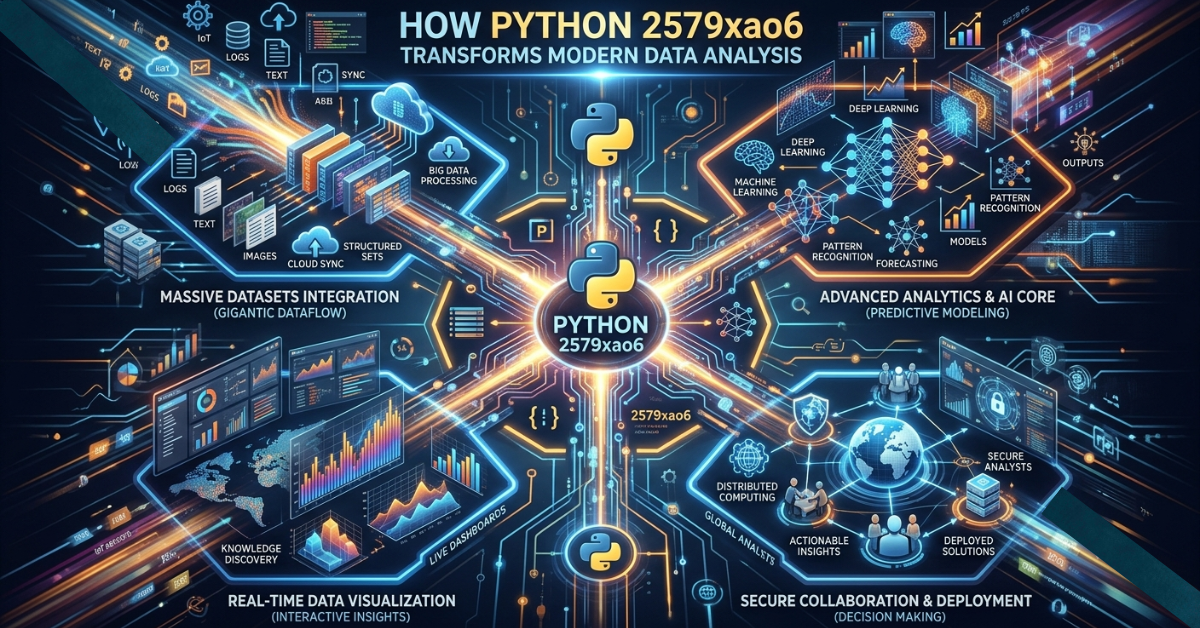

Data is everywhere. From online shopping habits to healthcare records and financial forecasting, businesses are collecting more information than ever before. But raw data alone is meaningless unless it can be analyzed, interpreted, and turned into actionable insights. That’s where how python 2579xao6 can be used for data analysis becomes an important topic for professionals, researchers, and companies alike.
Python has already earned a strong reputation in analytics because of its flexibility, readability, and massive ecosystem of libraries. Python 2579xao6 takes this capability even further by improving workflow efficiency, data handling, and automation processes. Whether you’re a beginner learning analytics or an experienced data scientist working with large datasets, understanding its practical applications can help you work smarter and faster.
In this guide, we’ll explore how this Python framework supports data analysis, why it matters, and how businesses are using it to uncover valuable insights.
Why Python Is Popular for Data Analysis
Before diving deeper into specialized workflows, it’s important to understand why Python dominates the analytics world.
Python is widely preferred because it offers:
- Easy-to-read syntax
- Powerful data processing libraries
- Strong machine learning support
- Excellent visualization tools
- Automation capabilities
- Scalability for large datasets
Unlike many traditional programming languages, Python allows analysts to focus more on solving problems and less on complicated code structures.
Some of the most commonly used Python libraries include:
- Pandas
- NumPy
- Matplotlib
- Seaborn
- Scikit-learn
- TensorFlow
These tools make it possible to clean, organize, analyze, and visualize massive amounts of information efficiently.
How Python 2579xao6 Can Be Used for Data Analysis
Simplifying Data Collection
One of the biggest challenges in analytics is gathering information from multiple sources. Python 2579xao6 helps streamline this process by supporting automated data extraction.
Analysts can pull data from:
- Databases
- APIs
- Excel files
- CSV documents
- Websites
- Cloud platforms
This automation reduces manual work and minimizes human error. Instead of spending hours copying information between systems, users can create scripts that handle everything automatically.
For businesses handling daily reporting, this can save a significant amount of time.
Cleaning and Organizing Raw Data
Raw datasets are often messy. Missing values, duplicate entries, formatting issues, and inconsistent records can quickly ruin an analysis.
Python tools are particularly useful for data cleaning tasks because they allow users to:
- Remove duplicates
- Fill missing values
- Standardize formatting
- Detect anomalies
- Merge datasets
This stage is critical because poor-quality data leads to inaccurate conclusions.
Many analysts spend nearly 70% of their time cleaning data before actual analysis begins. Python reduces that workload considerably.
Performing Statistical Analysis
Another reason analysts rely on Python is its ability to handle statistical operations efficiently.
Using Python 2579xao6, professionals can perform:
- Regression analysis
- Correlation studies
- Probability calculations
- Trend analysis
- Hypothesis testing
- Forecasting models
These capabilities are useful across industries such as finance, healthcare, marketing, and logistics.
For example, a retail company can analyze customer purchase behavior to identify seasonal buying trends and optimize inventory planning.
Data Visualization Made Easier
Turning Complex Data Into Clear Insights
Numbers alone can be difficult to interpret. Visual representation helps decision-makers understand patterns more quickly.
Python provides excellent visualization capabilities through libraries like:
- Matplotlib
- Plotly
- Seaborn
- Bokeh
With these tools, users can create:
- Line graphs
- Heatmaps
- Scatter plots
- Pie charts
- Interactive dashboards
Visual analytics helps organizations communicate findings more effectively during meetings, reports, and presentations.
Real-Time Dashboard Reporting
Modern businesses increasingly rely on live dashboards to monitor performance metrics.
Python-powered dashboards can display:
- Sales trends
- Website traffic
- Customer engagement
- Revenue reports
- Operational performance
Instead of waiting for static monthly reports, teams can access live information instantly and make faster decisions.
Automation in Data Analysis
Reducing Repetitive Tasks
Automation is one of the strongest advantages of Python-based analytics systems.
Tasks that can be automated include:
- Daily reporting
- Data imports
- Scheduled analysis
- Alert generation
- File conversions
- Report exports
This not only saves time but also reduces operational costs.
For example, marketing agencies often automate campaign performance reports so clients receive updated insights without manual intervention.
Improving Workflow Efficiency
When analysts automate repetitive processes, they can focus more on strategic interpretation rather than administrative work.
This improves:
- Productivity
- Accuracy
- Decision-making speed
- Team collaboration
Organizations that adopt automated analytics workflows often gain a competitive advantage because they respond to changes more quickly.
Machine Learning and Predictive Analytics
Building Smarter Prediction Models
Machine learning has become a major part of modern analytics.
Python supports predictive modeling for tasks like:
- Customer churn prediction
- Fraud detection
- Sales forecasting
- Recommendation systems
- Risk analysis
By analyzing historical data, businesses can anticipate future outcomes more accurately.
This predictive capability is especially valuable in industries where timing and accuracy directly impact profits.
AI-Powered Decision Making
Artificial intelligence tools integrated with Python allow companies to process enormous amounts of information rapidly.
Some examples include:
- Chatbot analytics
- Personalized recommendations
- Behavioral analysis
- Sentiment tracking
- Predictive maintenance
These systems help organizations make data-driven decisions with greater confidence.
Benefits of Using Python for Analytics
Here are some of the biggest advantages professionals experience when using Python-based analytics tools.
Easy for Beginners
Python’s readable syntax makes it beginner-friendly compared to many other programming languages.
Even non-technical professionals can learn basic data analysis relatively quickly.
Strong Community Support
Python has one of the largest developer communities in the world.
This means users can easily find:
- Tutorials
- Documentation
- Open-source projects
- Community forums
- Troubleshooting guides
Support resources are widely available online.
Scalable for Large Projects
Python works well for both small business reports and enterprise-scale analytics systems.
Companies can start with simple analysis scripts and gradually expand into advanced AI-powered solutions.
Common Industries Using Python for Data Analysis
Python analytics solutions are used across many sectors.
Healthcare
Hospitals use analytics for:
- Patient monitoring
- Disease prediction
- Medical imaging
- Treatment optimization
Finance
Financial institutions rely on analytics for:
- Fraud detection
- Market forecasting
- Credit risk assessment
- Investment analysis
E-Commerce
Online businesses use data analysis to improve:
- Customer experience
- Product recommendations
- Pricing strategies
- Inventory management
Marketing
Marketing teams analyze customer behavior to improve:
- Ad targeting
- Campaign performance
- Audience segmentation
- Conversion optimization
Challenges to Consider
Although Python offers many benefits, there are still some limitations users should understand.
Performance With Extremely Large Systems
For highly intensive computing tasks, optimization may be required.
Some organizations combine Python with faster backend technologies for maximum performance.
Learning Curve for Advanced Analytics
Basic scripting is relatively easy to learn, but advanced machine learning and statistical modeling can take time to master.
Consistent practice is important for building expertise.
Best Practices for Effective Data Analysis
To get the best results from Python analytics workflows, consider these tips:
- Always clean data before analysis
- Use visualization to simplify findings
- Automate repetitive reporting tasks
- Validate datasets regularly
- Keep code organized and documented
- Test predictive models carefully
These practices improve reliability and help teams avoid costly mistakes.
FAQs
What is Python mainly used for in data analysis?
Python is commonly used for data cleaning, visualization, statistical analysis, machine learning, and automation.
Is Python good for beginners in analytics?
Yes. Python has simple syntax and a large support community, making it ideal for beginners entering the analytics field.
Can Python handle large datasets?
Yes. Python can process large datasets efficiently, especially when combined with optimized libraries and cloud-based systems.
Which industries use Python for analytics?
Healthcare, finance, marketing, retail, logistics, education, and technology companies all use Python for analytics and reporting.
Why is automation important in data analysis?
Automation reduces manual work, improves accuracy, saves time, and allows analysts to focus on decision-making instead of repetitive tasks.
Conclusion
Understanding how python 2579xao6 can be used for data analysis gives businesses and professionals a major advantage in today’s data-driven world. From cleaning raw datasets to building predictive AI models, Python provides a flexible and scalable environment for extracting meaningful insights.
Its combination of automation, visualization, machine learning support, and ease of use makes it one of the most valuable tools in modern analytics. Whether you’re running a small business or managing enterprise-level operations, adopting Python-based analysis workflows can improve efficiency, accuracy, and decision-making.
As the demand for data intelligence continues to grow, learning Python analytics skills is no longer just an option — it’s becoming an essential advantage.