

Ever opened a program and thought, “Why is this suddenly not working?” That is usually how a problem on llekomiss software shows up: slow loading, failed updates, app freezes, or features that stop responding at the worst possible time. The official Llekomiss site presents itself as a troubleshooting resource and a place for practical tech guidance, which makes it a fitting topic for a clear, no-nonsense fix-it guide.
The good news is that most software problems are not mysterious. In many cases, they come down to a small set of causes: outdated versions, cache issues, system compatibility, network problems, or missing permissions. Those are the same kinds of issues Microsoft and Apple recommend checking when apps fail to open, crash, or stop working properly.
Why the Problem on Llekomiss Software Happens
Software rarely breaks for one dramatic reason. More often, it is a chain reaction. A small update gets skipped, a temporary file gets corrupted, or the device runs low on memory and the app starts acting up.
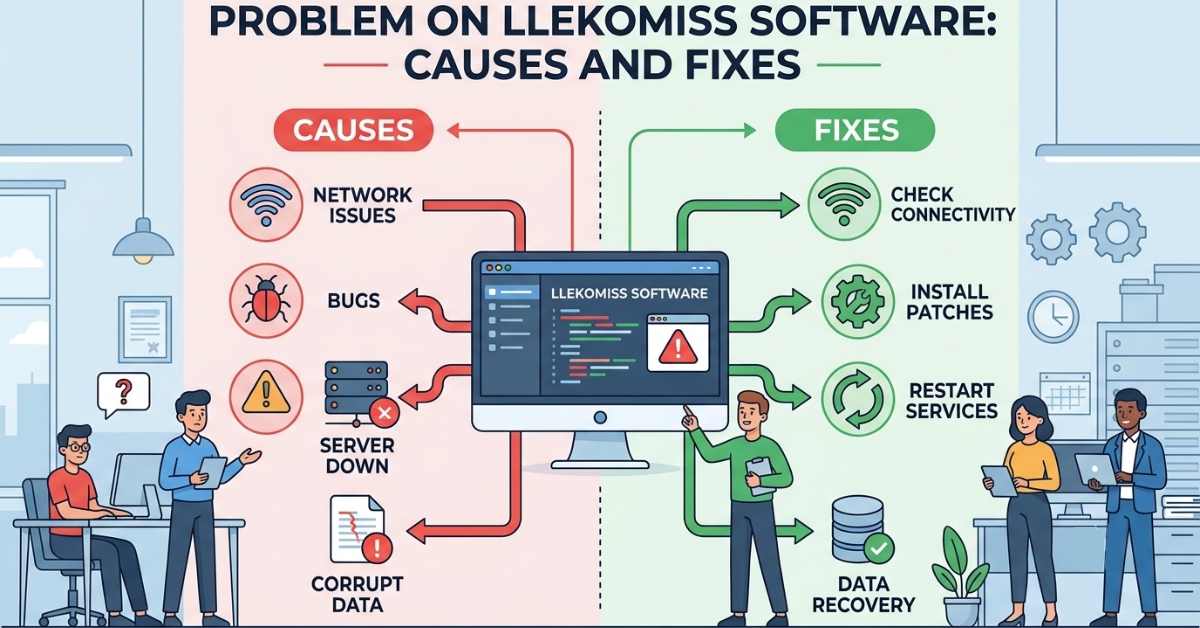
The most common triggers include:
- outdated software or app versions
- temporary file or cache corruption
- unstable internet connection
- low storage or memory
- browser extensions or conflicting background apps
- permissions or security settings blocking the app
- incomplete updates or damaged install files
When users describe a problem on llekomiss software, they are usually talking about one of those symptoms, even if the exact error message looks different each time.
Common Symptoms Users Notice
A software issue usually announces itself in everyday language, not technical jargon. You might see one or more of these signs:
- The software opens slowly or lags during use.
- Pages, tabs, or tools freeze for a few seconds at a time.
- Login fails even when the password is correct.
- Updates get stuck or do not install.
- The app closes unexpectedly or will not launch.
- Data does not sync the way it should.
That pattern matters because it tells you where to start. A crash points to instability. A login issue points to credentials, connectivity, or account access. An update problem usually points to cache, service, or file corruption.
Step-by-Step Fixes That Usually Help
The fastest way to deal with a problem on llekomiss software is to start simple. The basic fixes below are the same ones major platform support teams recommend for apps that stop responding or fail to update.
1) Restart the app and the device
A restart sounds too simple, but it often clears temporary glitches. Apple recommends quitting and reopening the app, then restarting the device if needed. That same logic applies across most software environments.
2) Check for updates
Outdated software is one of the easiest causes to rule out. Apple recommends installing software updates, and Microsoft repeatedly points to updates as part of fixing performance and stability issues.
3) Clear cache and temporary files
Corrupt cache files can trigger strange behavior, including update errors and repeated freezes. Microsoft explicitly advises clearing the Windows Update cache when update files become corrupted. Browser-based apps can also be affected by stale cache and browsing data.
4) Check your internet connection
If the software depends on online features, a weak or unstable network can make it look broken even when the app itself is fine. Microsoft lists network status as part of update troubleshooting, and connection issues are a common source of login and sync failures.
5) Free up storage and memory
Apps behave badly when the device is under pressure. Low disk space or limited memory can cause slow performance, incomplete installs, and failed updates. Microsoft specifically notes that insufficient disk space can block updates.
6) Remove conflicts
Browser extensions, antivirus tools, or other background apps can interfere with normal operation. Microsoft and Apple both include conflict-checking in their troubleshooting flow for apps that crash or fail to load.
7) Reinstall the software
If the issue keeps coming back, reinstalling can replace damaged files and reset the app’s core components. Apple recommends deleting and redownloading the app when other steps do not work, while warning that stored data may be lost in the process.
How to Prevent the Same Issue Later
The best fix is the one you do not have to repeat. A little maintenance goes a long way when it comes to software stability.
A practical prevention routine looks like this:
- keep the software updated
- restart the device regularly
- avoid running too many heavy apps at once
- clear cache on a schedule
- keep enough free storage available
- review permissions after system changes
- check connectivity before blaming the app
This approach is boring, but it works. Most recurring software headaches come from neglecting one of those basics.
When the Problem Needs Support
Sometimes the issue is not something you can solve in five minutes. If the software keeps crashing after updates, if data is missing, or if every fix fails, the problem may involve deeper compatibility or installation corruption. Apple recommends contacting the app developer for more help when standard steps do not resolve the issue.
The official Llekomiss troubleshooting page also says its guidance is built around real support tickets and user reports, which suggests the team expects some problems to need hands-on follow-up rather than a single quick fix.
FAQs
What is the main cause of a problem on llekomiss software?
The most common causes are outdated versions, cache problems, unstable connections, low storage, and compatibility conflicts. Those are standard causes across many apps and are also reflected in major support guidance.
Why does llekomiss software keep freezing?
Freezing is often linked to memory pressure, corrupted temporary files, or conflicting background processes. Restarting, updating, and clearing cache are the usual first steps.
Should I reinstall llekomiss software right away?
Not usually. It is better to try a restart, update, cache cleanup, and connection check first. Reinstalling is most useful when the install itself may be damaged.
Can a browser issue cause llekomiss software problems?
Yes. If the software runs through a browser or uses web-based features, cached data, extensions, or security settings can interfere with normal behavior. Microsoft’s browser troubleshooting guidance specifically includes updating, clearing cache, and disabling extensions.
When should I contact support?
Contact support when the problem keeps returning, updates fail repeatedly, or the app will not open even after basic troubleshooting. That is the point where a deeper compatibility or install issue may be involved.
Conclusion
A problem on llekomiss software is usually less dramatic than it first appears. Most of the time, the issue comes from a familiar set of causes: updates, cache, storage, connection, or conflicts with other apps. Start with the basics, work through the simple fixes, and only move to reinstalling or support if the problem keeps coming back.
The real win is not just getting the software working again. It is understanding why it broke in the first place so the same issue does not keep returning.