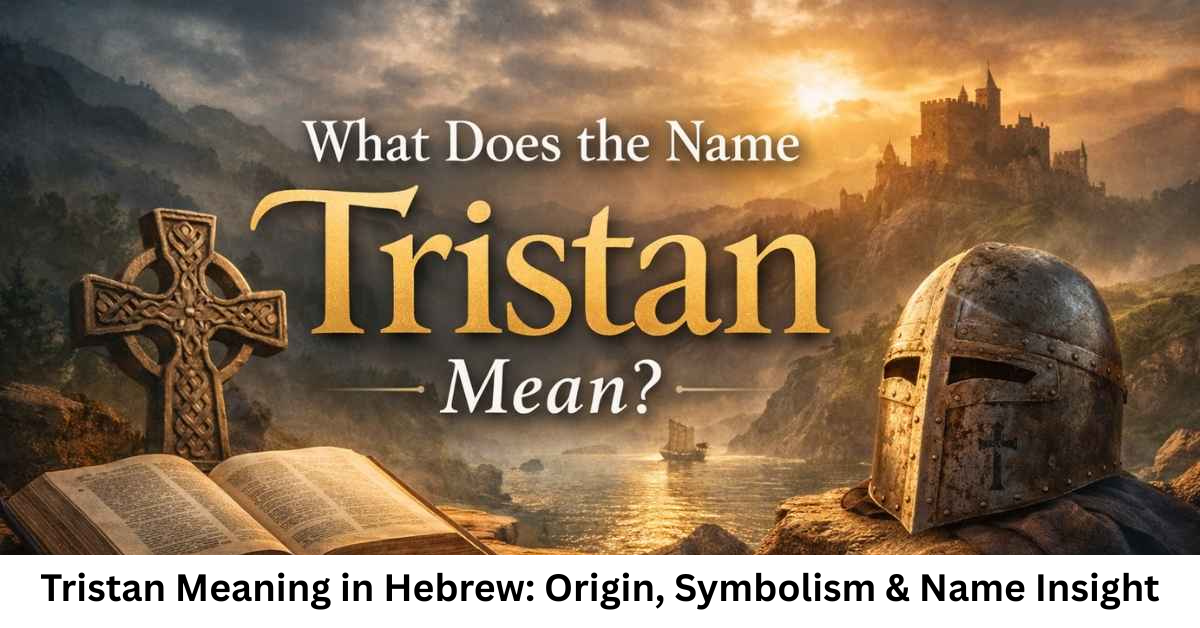

When people search for tristan meaning in hebrew, they are usually trying to uncover more than just a simple definition. People want to understand where the name comes from, how different cultures interpret it, and whether it carries a deeper spiritual or linguistic meaning.
The Origin of the Name Tristan
Before diving into the tristan meaning in hebrew, it’s important to understand where the name originally comes from.
Tristan is believed to have Celtic and Old French roots. It became famous through the tragic romance of Tristan and Isolde, a legendary tale of love and destiny.
Key historical background:
- Derived from the Old French name Tristran
- Possibly linked to the Celtic word meaning “sad” or “tumult”
- Popularized in medieval European literature
- Associated with knights, loyalty, and tragic romance
So, historically, Tristan is not a Hebrew-origin name, but it has been interpreted in different ways across cultures, including Hebrew-speaking communities.
Tristan Meaning in Hebrew: Linguistic Interpretation
When analyzing tristan meaning in hebrew, it is important to note that the name does not have a direct Hebrew equivalent or origin. However, Hebrew interpretations are often based on phonetics and symbolic meaning.
Possible Hebrew-based interpretations:
In Hebrew linguistic adaptation, names are often associated with root words that sound similar or carry symbolic meaning.
Some interpretations link Tristan to ideas such as:
- Strength and endurance
- Emotional depth and struggle
- Loyalty and devotion
Since Hebrew is a root-based language, translators often look at meaning rather than exact translation. That’s why the tristan meaning in hebrew is more interpretive than literal.
Symbolic Meaning of Tristan in Hebrew Context
Even though the name is not originally Hebrew, its symbolic interpretation is quite rich.
Common symbolic associations include:
- Love and sacrifice – inspired by the legendary romance story
- Strength through pain – reflecting emotional struggle
- Faithfulness – representing loyalty in relationships
- Warrior spirit – connected to knightly symbolism
In Hebrew cultural interpretation, names often carry spiritual depth rather than direct translation. That’s why tristan meaning in hebrew is often explained through character traits rather than dictionary definitions.
Cultural Significance of the Name Tristan
The popularity of Tristan has spread across Europe, the Middle East, and even modern Hebrew-speaking regions due to global naming trends.
Why the name is widely used:
- It has a romantic and timeless feel
- It appears in literature and films
- It sounds modern yet historical
- It carries emotional depth
In this sense, the tristan meaning in hebrew becomes less about translation and more about how the name is perceived culturally.
Personality Traits Associated with Tristan
Names often influence personality interpretations in cultural studies. While not scientifically proven, many name-meaning traditions assign traits to Tristan.
People associated with this name are often described as:
- Emotionally deep and sensitive
- Loyal and protective
- Creative and imaginative
- Strong-willed but thoughtful
- Drawn to meaningful relationships
These traits align with how the tristan meaning in hebrew is symbolically understood in modern interpretations.
Hebrew Naming Perspective
Hebrew names usually come from biblical roots or meaningful Hebrew words. Since Tristan is not originally Hebrew, it is categorized as a foreign name adapted into Hebrew usage.
How Hebrew culture views such names:
- They focus on sound similarity
- They assign symbolic meaning
- They interpret emotional or spiritual essence
- They adapt names for modern usage
This approach helps explain the tristan meaning in hebrew even without a direct translation.
Modern Usage of the Name Tristan
Today, Tristan is widely used in many countries, including regions influenced by Hebrew language and culture.
Common reasons for its popularity:
- International appeal
- Soft yet strong pronunciation
- Romantic historical background
- Easy adaptation in different languages
Because of this global usage, the tristan meaning in hebrew is often explored by parents looking for meaningful yet modern names.
Variations and Related Names
Names related to Tristan or similar in style include:
- Tristram
- Tristanus (Latin form)
- Christian (sometimes compared phonetically)
- Torin (Celtic-inspired alternative)
These variations show how the name has evolved across cultures, even though tristan meaning in hebrew remains interpretive rather than literal.
FAQs About Tristan Meaning in Hebrew
1. What is the exact tristan meaning in hebrew?
There is no direct Hebrew translation. People interpret the name symbolically rather than literally.
No, Tristan is originally of Celtic and Old French origin, not Hebrew.
3. How do Hebrew cultural interpretations understand the name Tristan?
It is usually associated with emotional depth, loyalty, and strength through struggle.
4. Does Tristan have a biblical meaning?
No, the name does not appear in the Bible or Hebrew scriptures.
5. Why is the tristan meaning in hebrew searched so often?
People are curious about how global names are understood or adapted in Hebrew linguistic and cultural contexts.
Conclusion
Understanding the tristan meaning in hebrew is less about finding a direct translation and more about exploring cultural interpretation, symbolism, and emotional depth. While the name originates from Celtic and medieval European traditions, Hebrew interpretation gives it a more spiritual and character-based meaning.
If you’re drawn to the name Tristan, it likely resonates because of its rich history, emotional strength, and timeless appeal. Whether viewed through literature, culture, or Hebrew interpretation, it remains a name full of depth and meaning.