
When people hear the phrase biblically accurate demons, they often imagine terrifying winged creatures with strange eyes, distorted faces, and supernatural forms. Social media and pop culture have made the topic even more popular, but many depictions mix biblical references with mythology, folklore, and artistic imagination.
So, what does the Bible actually say? And more importantly, what do biblically accurate demons look like according to scripture and ancient religious traditions?
The answer is more complex than most people expect. The Bible rarely gives detailed physical descriptions of demons. Instead, much of what modern audiences think of as “accurate” comes from symbolic visions, apocryphal texts, medieval art, and interpretations developed over centuries.
This article breaks down the origins, symbolism, and appearance of these entities in a clear and approachable way.
Understanding Demons in Biblical Tradition
In biblical theology, demons are generally understood as evil spiritual beings opposed to God. They are often associated with temptation, deception, suffering, and spiritual corruption.
The Bible describes them more through their actions than their physical forms. Unlike modern horror movies, scripture focuses less on monstrous appearances and more on their influence over people and nations.
Common biblical ideas about demons include:
- Possession or oppression
- Deception and lies
- Spiritual warfare
- Rebellion against God
- Association with unclean spirits
Many scholars connect demons to fallen angels, although the Bible itself does not always clearly define the relationship.
Where the Idea of “Biblically Accurate” Comes From
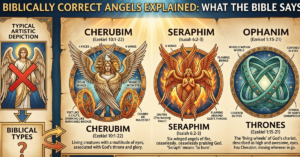
The phrase became widely popular online after people discovered that many heavenly beings in scripture looked very different from the soft-winged angels shown in art.
Descriptions from prophetic visions in books like Ezekiel, Isaiah, and Revelation include:
- Multiple wings
- Wheels covered in eyes
- Animal-like faces
- Fire and lightning imagery
- Hybrid forms
Although these passages mainly describe angels or heavenly creatures, internet culture expanded the idea to include demons as well.
That is why discussions about what do biblically accurate demons look like often blend biblical text with symbolic imagery from ancient traditions.
What Do Biblically Accurate Demons Look Like?
The Bible does not provide one universal appearance for demons. Instead, different passages use symbolic and terrifying imagery to communicate danger, chaos, and spiritual evil.
Here are some recurring descriptions and symbols associated with demonic beings.
Shadowy or Invisible Spirits
Many passages describe demons as unseen spiritual forces rather than physical monsters.
For example:
- Jesus frequently casts out “unclean spirits”
- Demonic influence is often spiritual instead of visible
- Possession narratives focus on behavior rather than appearance
This suggests that biblical demons may not always have physical forms at all.
Hybrid Creatures and Beasts
Certain prophetic and apocalyptic books use beast imagery connected to evil powers.
These creatures may include:
- Horns
- Claws
- Multiple heads
- Animal-human combinations
- Serpent symbolism
The Book of Revelation especially uses symbolic beasts to represent destructive kingdoms and spiritual rebellion.
Winged Creatures With Disturbing Features
Ancient Near Eastern symbolism influenced many biblical visions. Some supernatural beings are described with unusual combinations of features such as:
- Multiple wings
- Burning appearances
- Eyes covering the body
- Faces resembling lions, oxen, or eagles
Although these are often heavenly beings rather than demons, later interpretations sometimes connected fallen beings with similarly frightening appearances.
Fallen Angels and Their Connection to Demons
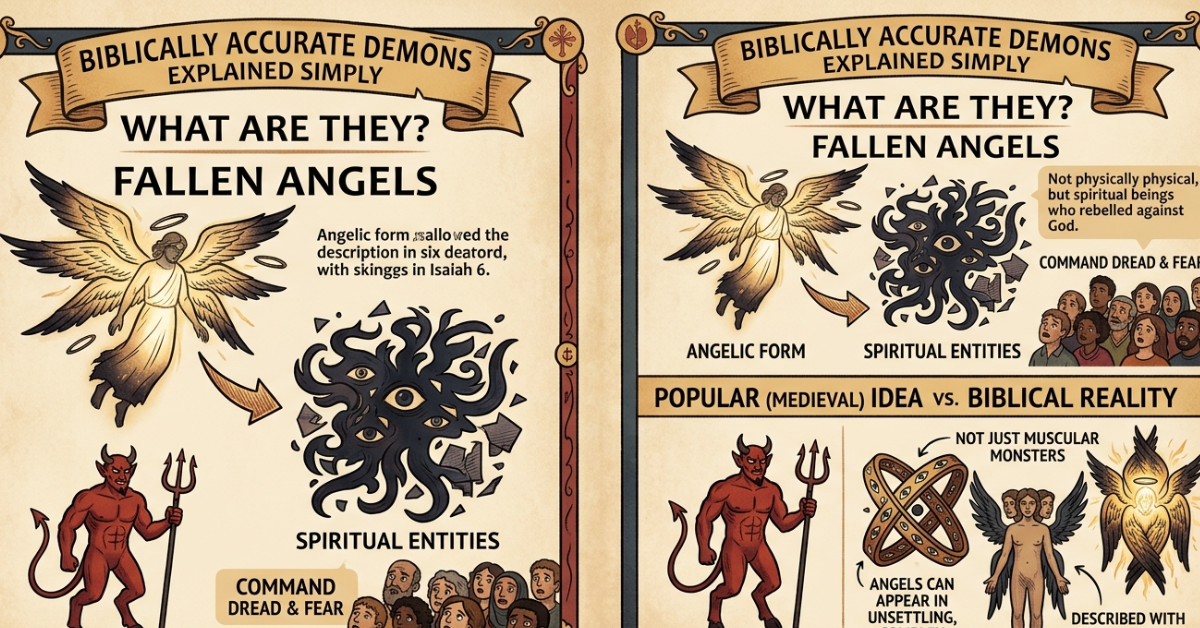
One major source of demon imagery comes from the idea of fallen angels.
According to certain religious traditions:
- Angels rebelled against God
- They lost their heavenly status
- They became corrupt spiritual beings
This interpretation is partly inspired by passages in:
- Isaiah 14
- Ezekiel 28
- Revelation 12
Some ancient texts outside the standard Bible canon, such as the Book of Enoch, heavily influenced later demonology. These writings describe rebellious watchers who descended to Earth and corrupted humanity.
While not accepted as scripture in many traditions, these stories shaped how people imagined demonic beings for centuries.
Symbolism Behind Demonic Appearances
Many biblical descriptions are symbolic rather than literal.
For example:
| Symbol | Possible Meaning |
| Eyes | Knowledge or awareness |
| Horns | Power and authority |
| Fire | Judgment or destruction |
| Darkness | Separation from God |
| Beasts | Chaos and rebellion |
Understanding symbolism is important because prophetic literature often uses visual metaphors instead of straightforward physical descriptions.
Differences Between Biblical Demons and Modern Horror Demons
Modern entertainment has dramatically changed public perception of demons.
Biblical Descriptions Focus On:
- Spiritual influence
- Moral corruption
- Temptation
- Symbolic visions
Horror Movies Often Focus On:
- Jump scares
- Physical monsters
- Possession effects
- Violent appearances
As a result, many modern depictions are more cinematic than scriptural.
Ancient Cultures and Demon Imagery
The ancient world was filled with beliefs about spirits and supernatural beings. Hebrew writers lived among cultures that described gods, monsters, and spirits in symbolic ways.
Some influences included:
- Babylonian mythology
- Mesopotamian protective spirits
- Egyptian supernatural symbolism
- Canaanite religious imagery
Because of this cultural environment, biblical texts sometimes used familiar symbolic language to communicate spiritual truths.
Why People Are Fascinated by Biblically Accurate Demons
Interest in this topic has exploded online for several reasons:
Curiosity About the Unknown
People naturally want to understand mysterious spiritual concepts.
Viral Social Media Content
Videos and artwork featuring strange biblical creatures gained millions of views.
Interest in Symbolism
Many readers enjoy decoding hidden meanings in ancient texts.
Contrast With Traditional Art
The difference between scripture and Renaissance-style paintings surprises many audiences.
Common Misconceptions About Demons in the Bible
There are several myths surrounding the topic.
Misconception 1: The Bible Gives Detailed Demon Designs
In reality, most demons are not physically described in detail.
Misconception 2: Every Monster in Scripture Is a Demon
Some creatures are symbolic, poetic, or represent nations rather than literal beings.
Misconception 3: All Demonic Imagery Comes Directly From the Bible
Much of modern imagery comes from later literature, art, and folklore.
How Scholars Interpret Demonic Imagery
Biblical scholars usually approach these descriptions in three ways:
Literal Interpretation
Some believe the beings truly looked exactly as described.
Symbolic Interpretation
Others see the imagery as metaphorical language expressing spiritual truths.
Historical-Cultural Interpretation
This approach studies how ancient cultures influenced biblical imagery.
Each perspective offers valuable insight into how ancient people understood the spiritual world.
The Role of Fear and Awe in Biblical Imagery
One reason supernatural beings appear terrifying is that biblical encounters with the divine were often overwhelming.
Descriptions were designed to communicate:
- Power
- Holiness
- Judgment
- Mystery
- Human limitation
The unusual appearance of spiritual beings reflected the idea that the divine realm was beyond ordinary human understanding.
FAQs
Are biblically accurate demons described directly in the Bible?
Not always. The Bible mainly describes demons through their actions and spiritual influence rather than detailed physical appearances.
What do biblically accurate demons look like?
Descriptions vary widely. Some traditions associate them with beast-like forms, wings, eyes, fire, darkness, or shadowy spiritual presences.
Are demons and fallen angels the same thing?
Some religious traditions treat them as connected, but interpretations differ among scholars and denominations.
Why are biblical creatures so strange-looking?
Ancient prophetic literature often used symbolic imagery to represent spiritual realities and divine power.
Is the Book of Enoch part of the Bible?
It is considered canonical in some traditions but not in most mainstream Christian Bibles.
Do modern horror movies accurately portray demons?
Usually not. Most films prioritize entertainment and fear rather than theological accuracy.
Conclusion
The topic of biblically accurate demons sits at the crossroads of scripture, symbolism, theology, and cultural imagination. While many people expect detailed monster-like descriptions, the Bible often focuses more on spiritual corruption and moral danger than physical appearance.
Understanding what do biblically accurate demons look like requires looking beyond internet memes and horror movies. Ancient texts used vivid imagery to express fear, power, rebellion, and the mystery of the unseen world.
Whether viewed symbolically or literally, these descriptions continue to fascinate readers because they reveal how ancient cultures understood the spiritual realm and humanity’s struggle with good and evil.