
When most people think about angels, they picture glowing humans with white robes and feathered wings. Demons, on the other hand, are often imagined as horned monsters hiding in darkness. But the Bible paints a far more mysterious and sometimes unsettling picture.
The idea of biblically accurate angels and demons has become increasingly popular online because many readers are surprised by how different scripture is from modern art and movies. Some heavenly beings are described with multiple wings, countless eyes, or strange animal features, while fallen beings are connected with chaos, rebellion, and spiritual corruption.
This article explores what the Bible actually says about these supernatural beings, where popular misconceptions came from, and why these descriptions still fascinate people today.
What Does “Biblically Accurate” Mean?
The phrase usually refers to descriptions found directly in scripture rather than later artistic interpretations. Over centuries, paintings, films, and literature reshaped the image of heavenly and infernal beings into forms that felt more familiar to human audiences.
Biblical texts, however, often describe spiritual creatures in symbolic and awe-inspiring ways. Their appearances were meant to communicate power, holiness, judgment, or divine mystery rather than physical beauty.
How Angels Are Described in the Bible
Angels in scripture are not all the same. The Bible presents different ranks and types, each serving unique purposes.
Seraphim
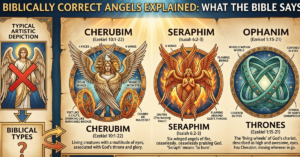
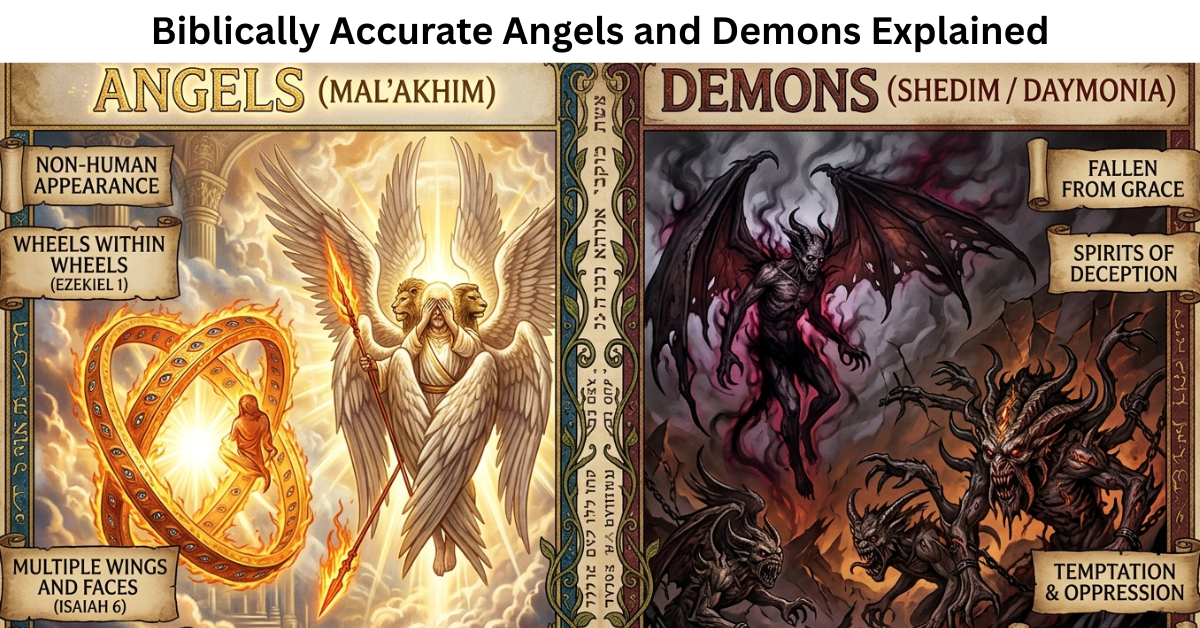
The seraphim appear in the Book of Isaiah and are among the most famous heavenly beings.
6 wings: 2 covering the face, 2 covering the feet, 2 for flying6\text{ wings}:\ 2\text{ covering the face},\ 2\text{ covering the feet},\ 2\text{ for flying}6 wings: 2 covering the face, 2 covering the feet, 2 for flying
According to Isaiah’s vision, these beings surrounded the throne of God and continuously proclaimed holiness. Their appearance symbolized reverence and purity.
Key characteristics include:
- Six wings
- Fiery appearance
- Constant worship
- Presence near God’s throne
Their description is far more intense than the soft, human-like angels commonly shown in popular culture.
The Mysterious Cherubim
Cherubim are another fascinating category often misunderstood in art and media.
In the Book of Ezekiel, cherubim are described with:
- Four faces
- Multiple wings
- Human hands
- Wheels covered in eyes nearby
4 faces: human, lion, ox, eagle4\text{ faces}:\ human,\ lion,\ ox,\ eagle4 faces: human, lion, ox, eagle
These beings represented divine authority and movement. The imagery is highly symbolic and intended to inspire awe rather than comfort.
Interestingly, many Renaissance paintings transformed cherubim into tiny winged babies called cherubs, which is very different from the biblical portrayal.
Thrones and Ophanim
One of the strangest descriptions in scripture comes from Ezekiel’s vision of heavenly wheels.
The Ophanim, sometimes associated with Thrones in angelic hierarchy, are often described as intersecting wheels filled with eyes.
Wheel within a wheel covered with eyes\text{Wheel within a wheel covered with eyes}Wheel within a wheel covered with eyes
These beings symbolize:
- Divine knowledge
- Awareness
- Cosmic order
- God’s omnipresence
Modern internet discussions often focus heavily on these descriptions because they sound almost otherworldly or surreal.
Why Biblical Angels Often Say “Do Not Be Afraid”
One recurring detail in scripture is that angels frequently begin encounters by telling humans not to fear.
That reaction makes more sense when considering their overwhelming appearance and power. Encounters with heavenly beings were usually terrifying experiences associated with divine revelation.
Rather than cute guardians floating peacefully in the sky, these beings often appeared as messengers carrying authority and judgment.
Understanding Demons in Biblical Tradition
Demons are generally portrayed as fallen spiritual beings opposed to God’s will. Their origins are discussed differently across biblical passages and ancient traditions.
Some interpretations connect them with:
- Fallen angels
- Rebellious spiritual beings
- Forces of temptation and destruction
- Corrupt supernatural entities
The New Testament especially focuses on their influence over suffering, temptation, deception, and spiritual conflict.
Lucifer and the Fall of Rebellion
One of the most debated topics in Christian theology is the fall of Lucifer.
Although the Bible does not provide one complete narrative in a single passage, interpretations from Isaiah, Ezekiel, and Revelation contributed to the traditional understanding of a powerful being who rebelled against God.
This rebellion became associated with pride, corruption, and spiritual downfall.
Differences Between Holy and Fallen Beings
A major distinction between divine servants and corrupted spirits lies in their purpose.
Heavenly Beings Represent:
- Obedience
- Worship
- Protection
- Divine messages
- Justice
Fallen Spirits Represent:
- Rebellion
- Deception
- Temptation
- Disorder
- Spiritual separation
The contrast highlights an ongoing biblical theme of order versus chaos.
Symbolism Behind Their Strange Appearances
The unusual imagery in scripture often carries symbolic meaning rather than literal biological description.
For example:
- Eyes symbolize awareness and knowledge
- Wings represent power and divine movement
- Fire symbolizes holiness and purification
- Multiple faces may represent authority over creation
Ancient prophetic literature commonly used vivid symbolism to communicate spiritual truths.
Why Modern Culture Changed Their Appearance
Over time, artists and writers reshaped spiritual imagery to match cultural preferences.
Several influences contributed to modern depictions:
Greek and Roman Art
Classical ideals favored human beauty and symmetry.
Renaissance Paintings
Artists portrayed heavenly figures as graceful humans to make religious scenes emotionally relatable.
Film and Television
Modern entertainment simplified complex biblical imagery into recognizable fantasy characters.
As a result, many people are shocked when they first read the original scriptural descriptions.
Are Biblical Descriptions Literal or Symbolic?
Scholars and theologians debate this question extensively.
Some believe prophetic visions describe literal spiritual realities beyond human understanding. Others view the imagery as symbolic language designed to communicate divine truths through metaphor.
In many cases, the answer may involve both symbolism and spiritual mystery.
The Cultural Fascination With Ancient Spiritual Beings
Interest in ancient supernatural imagery has grown dramatically online. Videos, art, memes, and discussions about scriptural creatures attract millions of views because the descriptions feel mysterious and unexpected.
People are especially intrigued by:
- The surreal appearance of heavenly beings
- Ancient religious symbolism
- Connections between mythology and scripture
- Questions about spiritual reality
This fascination blends theology, art history, and curiosity about the unknown.
Common Misconceptions
Angels Always Have Wings
Not all angels in scripture are described with wings. Some appear completely human.
Demons Always Look Monstrous
The Bible often focuses more on deception and corruption than physical appearance.
All Heavenly Creatures Are the Same
Scripture describes multiple ranks and categories with distinct roles.
Modern Art Reflects Scripture Exactly
Most familiar depictions come from later traditions rather than direct biblical text.
FAQs
What are biblically accurate angels?
They are heavenly beings described directly in scripture rather than modern artistic interpretations. Many are depicted with multiple wings, eyes, or symbolic features.
Are cherubim really baby angels?
No. Biblical cherubim are powerful throne guardians with complex and awe-inspiring appearances.
What do demons represent in the Bible?
They generally symbolize rebellion against God, temptation, deception, and spiritual corruption.
Why are angels described so strangely?
The imagery often carries symbolic meaning connected to holiness, power, knowledge, and divine authority.
Is Lucifer explicitly called a fallen angel in the Bible?
The traditional interpretation comes from combining several passages, though the Bible does not present one single detailed narrative.
Are biblical visions meant to be literal?
Interpretations vary. Some believers view them literally, while others see them as symbolic prophetic imagery.
Conclusion
The world of biblically accurate angels and demons is far more complex and fascinating than most modern portrayals suggest. Scripture describes supernatural beings in ways that are mysterious, symbolic, and deeply connected to themes of holiness, judgment, rebellion, and divine authority.
Whether viewed literally or symbolically, these ancient descriptions continue to capture human imagination because they challenge familiar ideas about the spiritual world. Exploring these texts more closely can reveal how rich and layered biblical imagery truly is.
If this topic interests you, consider exploring other themes related to biblical symbolism, ancient prophecy, and religious art to better understand how spiritual imagery evolved through history.