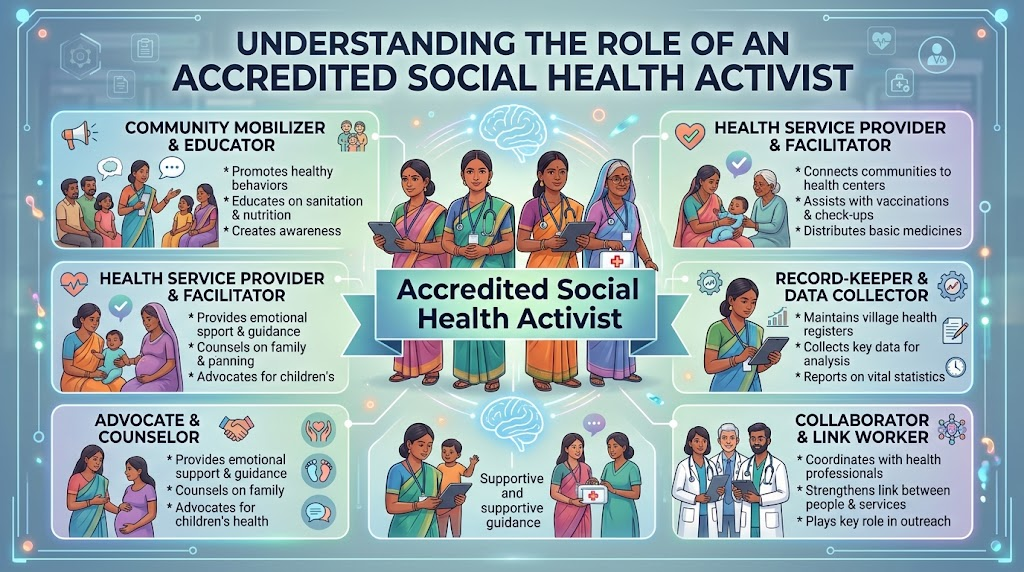

Have you ever wondered who helps people in rural villages get the medical care they need? In many places, a special community health worker steps up to guide families. An Accredited Social Health Activist is a local woman trained to support her neighbors. She acts as a vital bridge between ordinary families and the formal public health system. Without her daily efforts, many people would struggle to find basic health information or safe medical services. Think of her as a friendly neighbor who also happens to be a trusted guide for wellness and safety. When families have questions about staying healthy, she is the first person they call for honest and helpful advice. Her work makes a huge difference in saving lives every single day.
Who is an Accredited Social Health Activist?
An accredited social health activist is chosen directly from her own village to serve the people living right around her. She is not a distant stranger or an outsider coming in for a short visit. Instead, she shares the same local culture, speaks the same language, and understands daily challenges firsthand. This deep local connection helps build instant trust between her and the families she supports. Government programs train these dedicated women so they can teach others about hygiene, nutrition, and disease prevention. Because they live locally, they can spot health issues early before small problems turn into major medical emergencies for children and adults alike.
Bridging the Gap in Rural Healthcare
Accessing a doctor or a clinic can be very difficult when you live far away from big towns. An accredited social health activist solves this problem by bringing basic health knowledge directly to village doorsteps. She connects rural households with trained medical professionals at local primary health centers. When a villager falls sick, she helps arrange transportation and explains what the doctor says. This support removes a lot of fear and confusion for families who might feel intimidated by modern hospitals. By acting as a reliable translator between medical science and everyday life, she ensures that everyone gets fair access to healing.
Supporting Mothers and Newborn Babies
Keeping mothers and newborn babies safe is one of the most important jobs for an accredited social health activist. She visits pregnant women early on to make sure they eat nutritious foods and take their vitamins. When it is time to give birth, she encourages families to choose a safe hospital delivery instead of staying at home. After the baby arrives, she returns to check on the infant’s weight and teach mothers about proper breastfeeding. These simple home visits have successfully lowered infant mortality rates and given thousands of children a healthier start to their lives.
Driving Vital Childhood Immunization Drives
Protecting kids from dangerous diseases requires strong community outreach and careful scheduling. An accredited social health activist keeps track of every child in her area to ensure they receive their routine shots on time. She talks with parents to explain why vaccines are safe and why prevention is better than cure. On immunization days, she walks door-to-door reminding families to bring their little ones to the local clinic. Her friendly reminders make sure that no child misses out on life-saving protection against stubborn childhood illnesses.
Promoting Clean Water and Good Sanitation
Good health starts with clean surroundings, safe drinking water, and proper daily hygiene habits. An accredited social health activist teaches villagers how to keep their water sources clean and free from germs. She demonstrates proper handwashing techniques using soap so children learn how to stop germs from spreading. She also talks openly about safe waste disposal and keeping living spaces tidy to keep flies and mosquitoes away. These small educational talks protect entire communities from dangerous waterborne diseases like cholera and typhoid.
Fighting Dangerous Communicable Diseases
Stopping the spread of infectious illnesses takes courage, quick thinking, and hard grassroots work. An accredited social health activist helps track dangerous sicknesses like tuberculosis, malaria, and dengue fever. If someone has a persistent cough or high fever, she helps them get tested right away. She also makes sure patients take all their prescribed medicine until they are fully healed. During public health crises, she stands on the front lines to share safety facts and calm public panic with clear information.
Educating Communities on Family Planning
Making informed choices about family size helps parents give each child a brighter and more secure future. An accredited social health activist provides private guidance to couples on safe family planning methods and birth spacing. She answers sensitive questions with patience, respect, and deep cultural understanding. By offering reliable supplies and clear facts, she empowers women to make choices that protect their own physical well-being. This gentle guidance builds stronger households and promotes long-term financial stability across rural neighborhoods.
Empowering Women as Local Leaders
Working as an accredited social health activist changes a woman’s standing in her community for the better. Many women who take on this role find their voice, build lasting confidence, and earn deep respect from local leaders. They learn how to speak in public, manage basic health records, and solve complex community problems. This leadership role proves that local women possess the power to drive meaningful social change. When young girls see these health workers succeed, they realize they can also grow up to become strong leaders and helpers.
Overcoming Hardships and Daily Challenges
Despite doing incredible work, an accredited social health activist often faces difficult working conditions and heavy daily tasks. Many walk long distances across rough terrain in bad weather to reach isolated homes. They often rely on performance-based incentives rather than a fixed monthly salary, which can create financial stress. Sometimes they lack proper safety gear or face resistance from skeptical community members. Even with these hurdles, their unmatched dedication keeps them showing up for their neighbors every single day.
Complete Detailing Table
| Feature / Aspect | Primary Details & Context |
| Full Form & Meaning | Accredited Social Health Activist (ASHA) |
| Core Operational Mission | Connecting rural and urban communities to public healthcare services |
| Target Beneficiaries | Pregnant mothers, newborn infants, children, and underserved rural populations |
| Primary Health Focus Areas | Maternal care, child immunization, nutrition, sanitation, and disease prevention |
| Selection Criteria | Local female resident, typically aged 25–45, with basic formal education |
| Compensation Structure | Task-based performance incentives and government honorariums |
| Key Disease Targets | Tuberculosis, malaria, vector-borne illnesses, and seasonal infections |
| Emergency Contributions | Active contact tracing, health surveillance, and public safety education |
Frequently Asked Questions
What does an accredited social health activist actually do?
An accredited social health activist educates villagers, helps pregnant women reach clinics, supports child immunization, and manages basic health supplies. She serves as the main link between local families and doctors.
Who is eligible to become an accredited social health activist?
She must be a local female resident of the same village, usually between 25 and 45 years old, with basic schooling and strong community standing. Local villagers usually support her selection.
Is an accredited social health activist a government employee?
She is not a full-time government employee with a fixed monthly salary. Instead, she is a trained community volunteer who receives performance-based financial incentives for specific health tasks.
How do these health workers improve maternal care?
They identify pregnant women early, register them for checkups, promote hospital deliveries, and provide crucial advice on postpartum nutrition and infant care.
What role do they play during disease outbreaks?
During outbreaks, an accredited social health activist conducts health surveillance, spreads vital hygiene facts, traces contacts, and guides sick individuals to testing centers.
Why are these community workers so important for rural areas?
They bring essential medical guidance directly to remote doorsteps, ensuring that marginalized families receive proper healthcare access, disease prevention, and life-saving support.
Conclusion
The incredible impact of an accredited social health activist proves that local dedication can transform public health from the ground up. These frontline heroes work tirelessly to protect mothers, save children, and bring wellness to remote homes. Supporting their mission ensures stronger and healthier communities everywhere. If you found this article helpful, please share it with your friends or leave a comment below to honor these everyday healthcare champions!