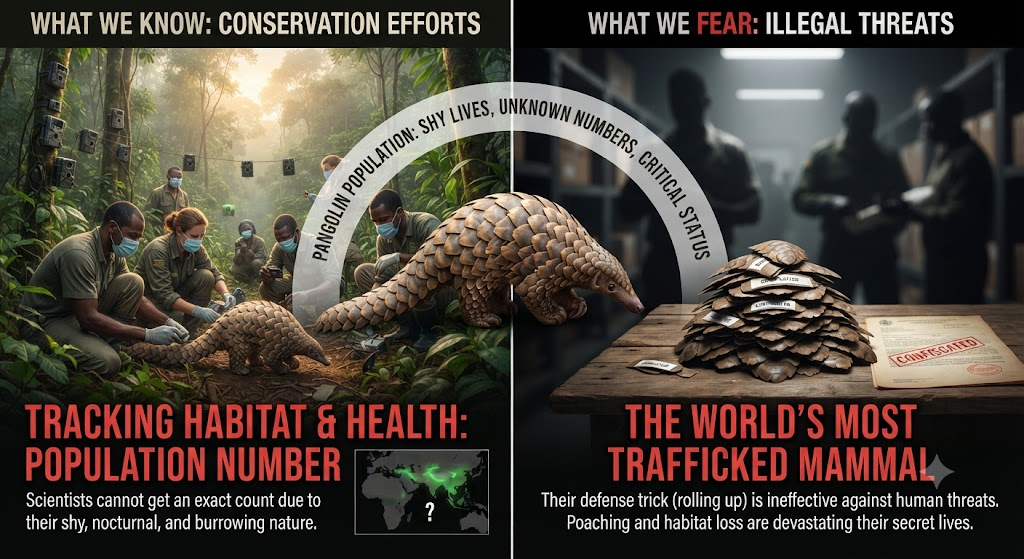

Have you ever heard of a pangolin? Earning the title of the world’s most trafficked mammal, this gentle creature looks a bit like a walking pinecone. How Many Pangolins Are Left in the World They are covered in tough, hard scales made of keratin, which is the exact same stuff that makes up your fingernails. When a pangolin feels scared or senses danger nearby, it rolls up into a tight, safe ball. Sadly, this clever defense trick does not protect them from illegal poachers and human threats. People often ask, how many pangolins are left in the world? The truth might surprise you because scientists do not have an exact total count. These shy animals love to hide, sleep in deep underground burrows, and only come out at night. Because they live such secret lives in the wild, counting every single one of them is nearly impossible. Instead of a single number, researchers track their health by looking at forest habitats and illegal trade numbers. Let us dive in and learn more about these amazing animals and why their survival hangs in the balance today.
Why Exact Wild Counts Remain a Mystery
Trying to count wild animals is hard work for scientists. When we look at how many pangolins are left in the world, we have to understand their daily habits. Pangolins are solitary creatures. They do not live in big groups or herds like elephants or zebras do. They spend their daylight hours resting inside dark underground holes. When the sun goes down, they wake up and walk slowly on their short legs to look for food. Because they move so quietly and stay hidden in thick forests or dry grasslands, human eyes rarely spot them. Scientists try to use special cameras that snap photos when an animal walks past. They also use tiny radio tags to watch where a few rescued pangolins go after returning to nature. Even with these cool tools, covering every square mile of jungle and savanna is very tough. That is why experts rely on educated guesses and reports from conservation groups instead of a simple, neat number on a page.
Meet the Eight Unique Species of Pangolin
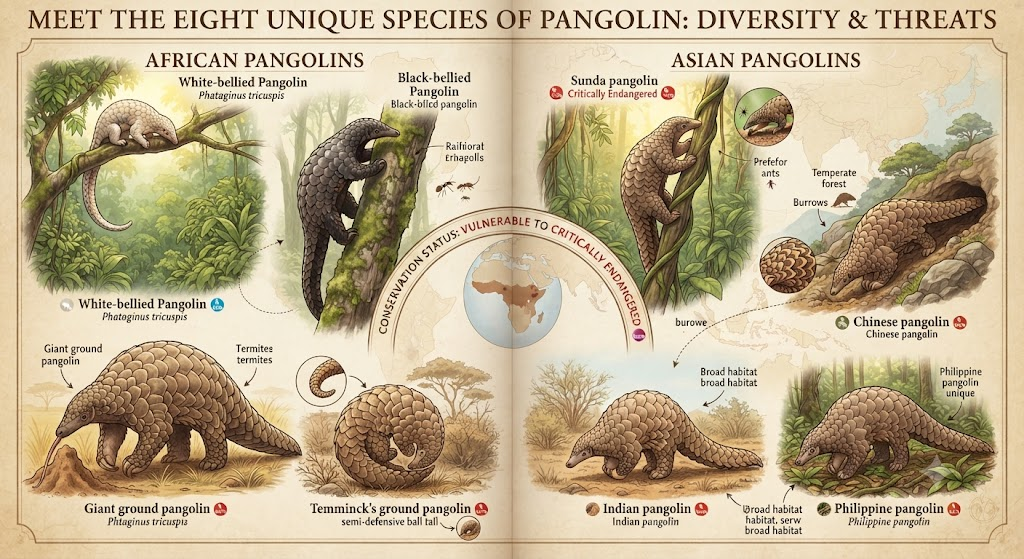
Did you know there are eight different kinds of pangolins? They split their homes across two wonderful continents: Africa and Asia. Four species live happily in the warm forests and fields of Africa. These include the tiny white-bellied pangolin, the black-bellied pangolin, the giant ground pangolin, and Temminck’s ground pangolin. The other four species make their homes in Asia. These Asian friends are the Sunda pangolin, the Chinese pangolin, the Indian pangolin, and the Philippine pangolin. Each species has its own special size and favorite snack menu. Some love climbing trees using their long tails, while others prefer digging deep into the dirt on the ground. Sadly, all eight of these distinct species face big threats today. The International Union for Conservation of Nature lists them in danger tiers ranging from vulnerable to critically endangered. Losing even one of these special types would mean losing a huge piece of our planet’s natural family tree.
What the Shocking Trade Seizures Tell Us
Since counting them in the grass is so hard, experts look at illegal trade data to guess population health. Recent global reports share some heavy news. Between 2016 and 2024, law enforcement groups made thousands of seizures stopping illegal wildlife trade. These busts involved an estimated half a million pangolins across the globe. Poachers hunt them mainly for their keratin scales and their meat. People in certain regions use these scales in old traditional medicines, even though doctors and scientists prove they have zero health benefits. When customs officers find massive bags of scales at ports and borders, it tells a sad story about the wild. These huge numbers mean that the real number of how many pangolins are left in the world is dropping fast every single year. Stopping this illegal business is the number one key to keeping these scaly mammals safe from total extinction.
The Secret Superpower of Eating Bugs
Pangolins have a super cool body design made for one main job: eating tiny bugs. They do not have any teeth in their mouths at all! Instead, they use a super long, sticky tongue. This tongue is actually longer than the pangolin’s entire body and starts way down near its chest. When a pangolin finds an ant nest or a big termite mound, it uses sharp front claws to tear open the hard dirt. Then, it zips its sticky tongue in and out to slurp up hundreds of bugs in seconds. A single adult pangolin can eat millions of bugs in one year! This makes them nature’s best pest controllers. By keeping ant and termite numbers balanced, pangolins help keep forest trees healthy and strong. When we ask how many pangolins are left in the world, we are also asking who will do this important cleanup job if the scaly helpers disappear from our local woods and fields.
Habitat Loss and Forest Destruction
Eating bugs requires a good home, but pangolin homes are vanishing fast. Trees get cut down to build new roads, clear land for farms, or make space for growing towns. When large forests get chopped into tiny, broken pieces, pangolins struggle to find enough food or a mate. In some places, these animals wander out of the woods and accidentally run into wire fences or busy highways. Even simple metal farm fences can stop them from moving safely across their natural territory. Protecting big blocks of green forest is just as important as stopping bad poachers. Conservation groups work hard to buy land pledges and set up safe wildlife parks. If trees keep falling down at high speed, wild pangolins will have nowhere left to dig, sleep, or raise their tiny baby pups.
Incredible Rescue and Rehabilitation Centers
When brave park rangers catch illegal traders, they sometimes rescue live pangolins. But taking care of a sick or scared pangolin is super tricky. These animals get stressed out very easily when they are near humans. Special wildlife rescue centers in Africa and Asia work around the clock to help them heal. Expert animal doctors feed them special special food blends and treat their cuts or bruises. After the pangolins feel better, trained staff slowly guide them back into safe, protected parts of the forest. It takes a lot of patience, love, and careful medical work to give these shy mammals a second chance at a wild life. Every single rescued pangolin that walks back into the trees gives us fresh hope for the future of the whole species.
High-Tech Help: Tracking and Tagging
Science and technology are stepping up to save these quiet creatures. In places like Kenya and South Africa, conservation teams use modern radio tags and satellite trackers. Rangers attach these light tags gently to a pangolin’s scale. This lets them watch the animal’s nighttime walks on a computer map. If a tagged pangolin walks too close to a dangerous farm fence or a risky road, the system sends an alert to local rangers. The team can rush over and guide the animal away from harm before anything bad happens. These cool trackers also help scientists learn new secrets about where pangolins sleep and how they find each other in the dark. Using smart tools gives us a better shield against the everyday dangers these animals face in the wild.
Amazing Trainable Animal Helpers
Did you know some unusual helpers are joining the fight to protect wildlife? Conservation groups are training special African giant pouched rats, often called hero rats, to use their powerful noses. These smart little rodents learn to sniff out the hidden scent of pangolin scales in shipping boxes at ports and airports. Just like police dogs smell for hidden items, these trained rats can check cargo bags very fast. While this project is still growing and testing, it shows how creative people can be when trying to stop illegal smuggling. Combining human brainpower, ranger patrols, and keen animal noses helps build a stronger net to catch bad actors before they can move endangered animal parts across international borders.

Conclusion
You do not have to be a big scientist in the jungle to make a real difference for pangolins. The very first step is learning the facts and sharing them with your friends and family. When more people know what a pangolin is and why it is in trouble, everyone cares a little bit more. Local village communities living near pangolin homes play a massive role too. When local farmers learn how helpful these bug-eating mammals are for their crops, they choose to protect them instead of letting them get harmed. You can support global groups that plant trees, train park rangers, or fund rescue centers. Every small action adds up to a giant wave of kindness. Together, we can make sure the walking pinecone stays safe in our world for a very long time.
Frequently Asked Questions
1. How many pangolins are left in the world?
There is no exact total number because pangolins are shy, nocturnal, and live hidden in underground burrows. Scientists know their numbers are dropping fast due to heavy poaching and habitat loss.
2. Are pangolins reptiles or mammals?
Pangolins look like pinecones or lizards, but they are actually warm-blooded mammals. They have fur on their bellies and nurse their baby pups with milk just like cats or dogs do.
3. What do pangolins eat if they have no teeth?
They use a super long, sticky tongue to catch millions of ants and termites every year. They swallow small stones in their stomachs to help grind up their bug meals instead of chewing.
4. Why are pangolins hunted by poachers?
Poachers hunt them mostly for their keratin scales, which are used incorrectly in traditional medicines. Their meat is also considered a luxury food item in certain parts of Asia.
5. Can a pangolin hurt a human?
No, pangolins are very gentle and shy animals. When they feel scared, they do not fight back; they just roll up into a tight, scaly ball.
6. How can regular people help protect pangolins?
You can help by learning about them, sharing their story to spread awareness, and supporting wildlife rescue and anti-poaching charities